Who Disney is for
Disney is the most specialized of the large lines. It is built around families traveling with children, and almost every structural decision on board follows from that. There is no casino on any ship (the space a casino would occupy goes to children’s clubs, theaters and pools), and the stage shows are full Disney productions rather than a revue.
It also works for adults traveling without children, which surprises people. The adult-only areas are genuine and enforced: the Quiet Cove pool and its bar, the Palo and Remy restaurants and their equivalents on the newer ships, and adult-only sections of the evening entertainment district. What those areas cannot do is change the passenger list. In a school break there will be well over a thousand children on board, and the atrium will sound like it.
It is the wrong line for anyone who wants a casino, a late bar scene, or a cheap week at sea.
What is actually different about it
Rotational dining. Each ship has three main restaurants and you eat in a different one every night, but your table companions and your serving team move with you. That solves something no other line has solved: the waiter who learns on night one that your child will eat nothing green still knows it on night five. It is the single most-copied idea Disney has, and nobody has copied it properly.
Split bathrooms. Most stateroom categories divide the bathroom in two, a basin and shower in one compartment, a basin and toilet in the other. On paper it is a triviality. With four people dressing for dinner in one cabin it is the feature people talk about afterward.
Two private islands. Castaway Cay, a thousand-acre island the line has used since 1998, and Lookout Cay at Lighthouse Point, six hundred acres on the southern tip of Eleuthera, which opened in 2024. Both have an adults-only beach at one end. Between them they appear on most Bahamas and Caribbean sailings, and on none of the sailings from anywhere else.
Entertainment on a scale nobody matches. Broadway-format productions of the films, character appearances included in the fare, and a deck party that ends with fireworks over the water; Disney is the only operator that fires fireworks at sea.
The fleet, and where it goes
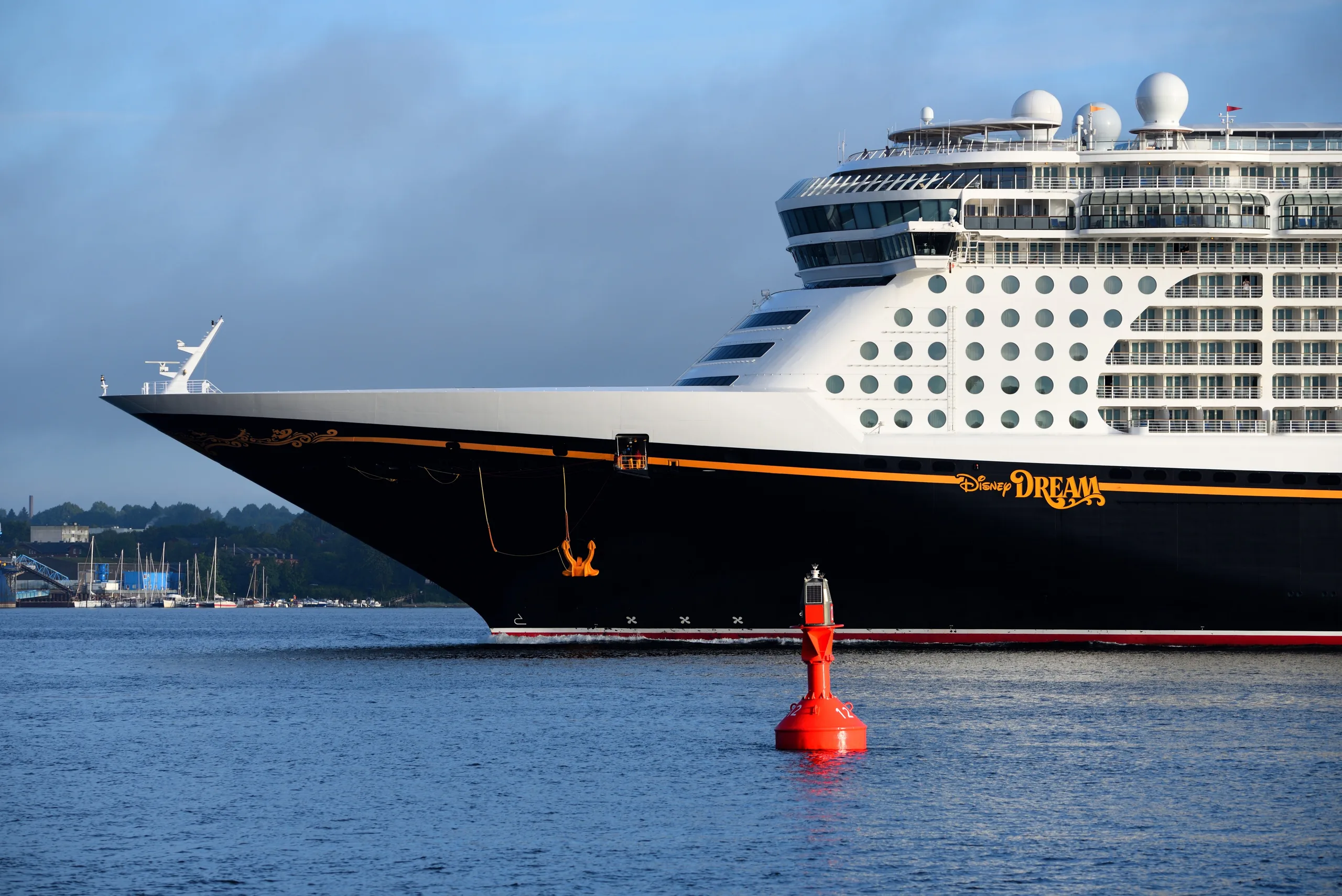
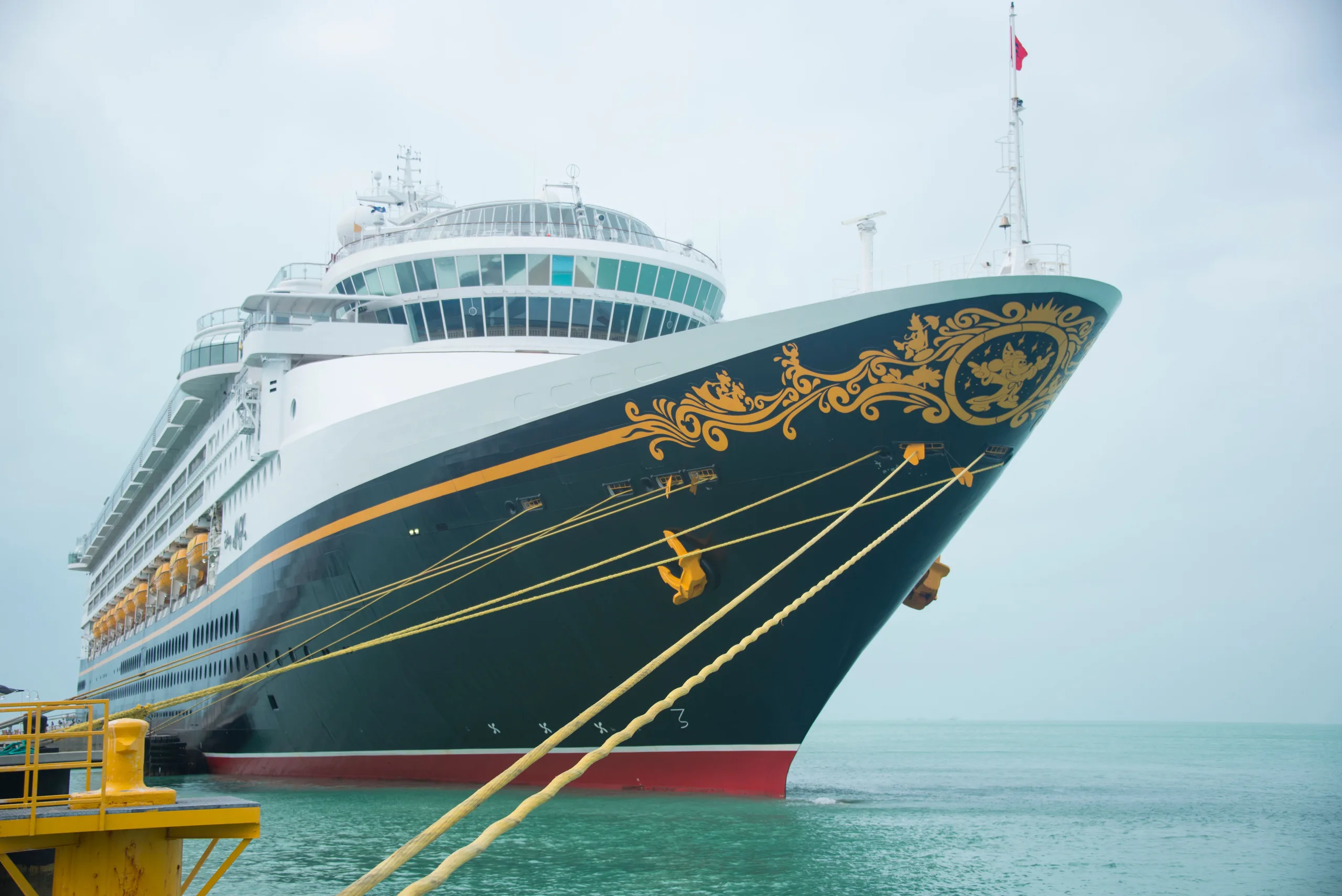
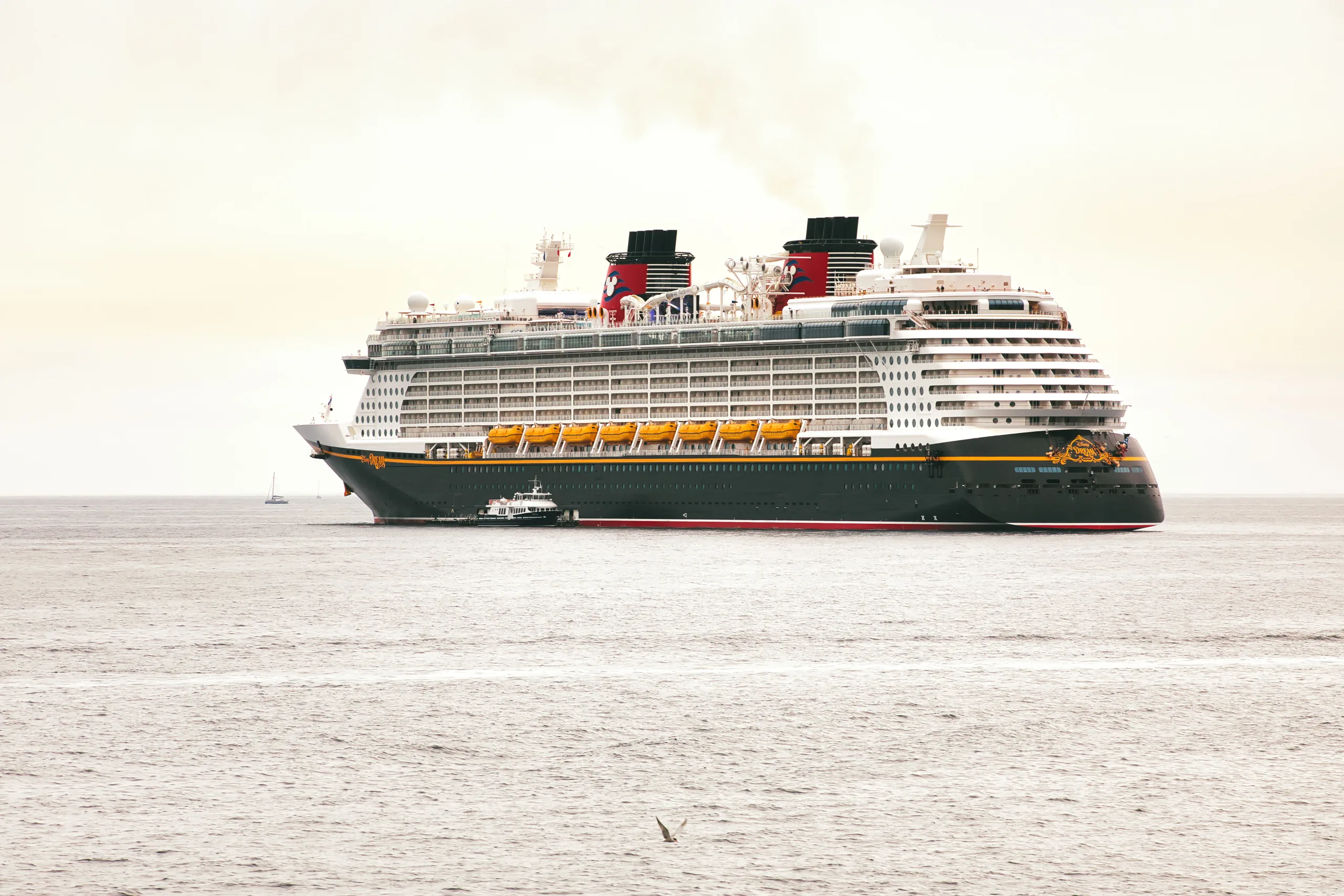
Disney Magic (1998) and Disney Wonder (1999) are the original pair and by some distance the smallest. Disney Dream (2011) and Disney Fantasy (2012) are a size up. Disney Wish (2022), Disney Treasure (2024) and Disney Destiny (2025) are the current class, and further ships are on order into the 2030s, so any fleet count you read is a snapshot rather than a fact.
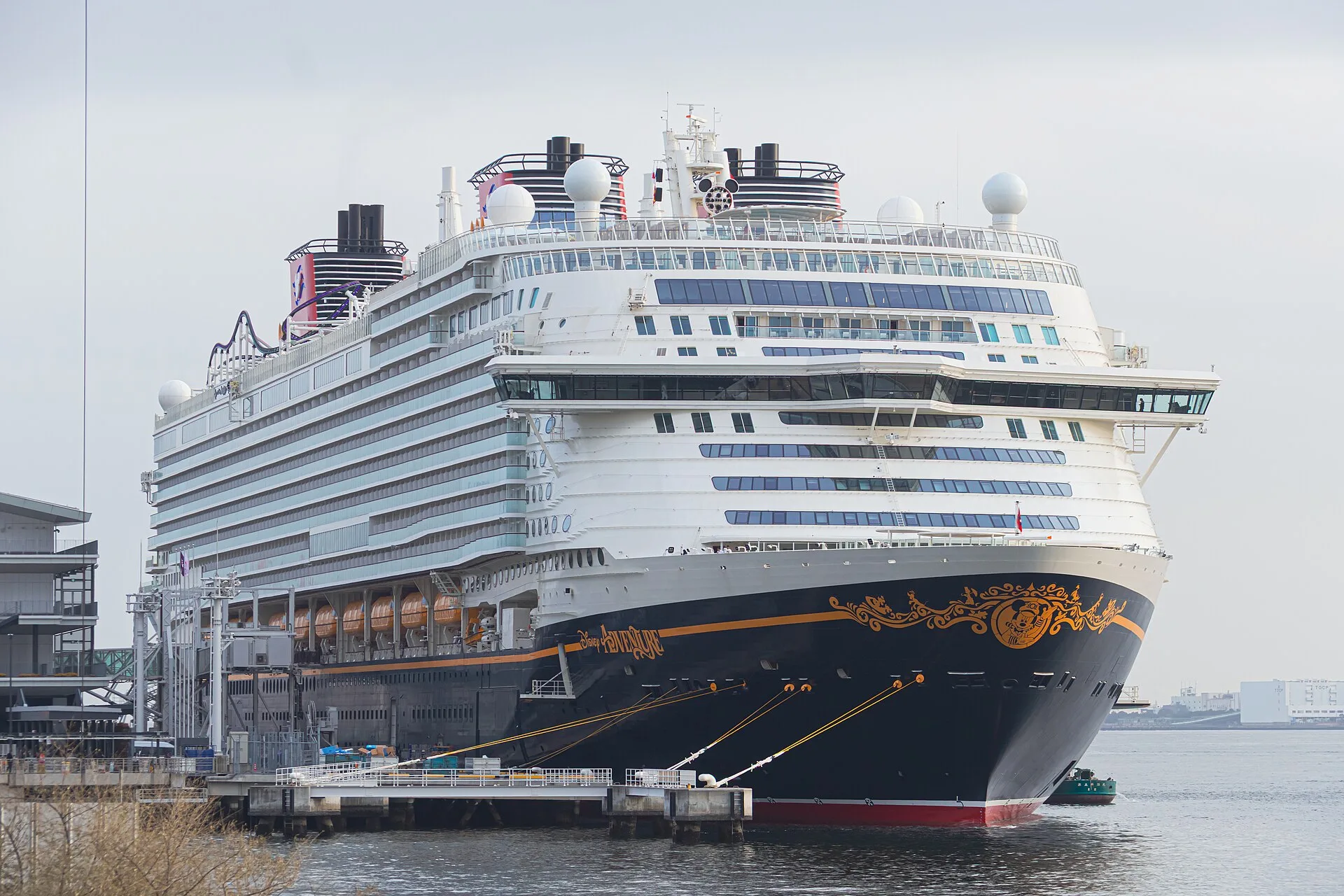
The center of gravity is still Florida. Port Canaveral and Fort Lauderdale between them carry most of the program, on three- to seven-night runs to the Bahamas and the Caribbean. But that is no longer the whole line. Disney Adventure, the largest ship the company has ever operated at around 208,000 gross tons, is based year-round at Singapore on three- and four-night round trips that call nowhere at all: the ship is the destination and the itinerary is a formality. Elsewhere the fleet runs Alaska out of Vancouver, Mexico and the California coast out of San Diego, and European summers out of Southampton and the western Mediterranean.
What to know before you book
It is the most expensive mainstream line, per night, and it does not discount. Comparable weeks on Royal Caribbean or Norwegian will be materially cheaper. Disney sells out further ahead than the rest of the market and prices tend to rise rather than fall as a sailing fills, so the late bargain that other lines produce does not appear here.
A great deal is not in the fare. Alcohol, wifi, shore excursions, the adult restaurants and the spa are all extra, and gratuities are charged per person per night on top. The children’s clubs, the shows, the main restaurants, room service and soft drinks are included, which is the reverse of the premium lines’ arithmetic.
Which ship you sail matters more than usual. Magic and Wonder are twenty-five years old and lack most of the water attractions the newer ships are sold on; Disney Adventure is a different proposition again, with rides, no ports and menus written for an Asian market. Read the ship, not just the brand.
The Singapore sailings are three or four nights with no port calls. That is the product, not an omission, but it is worth knowing before you book flights to Asia expecting to see any of it.