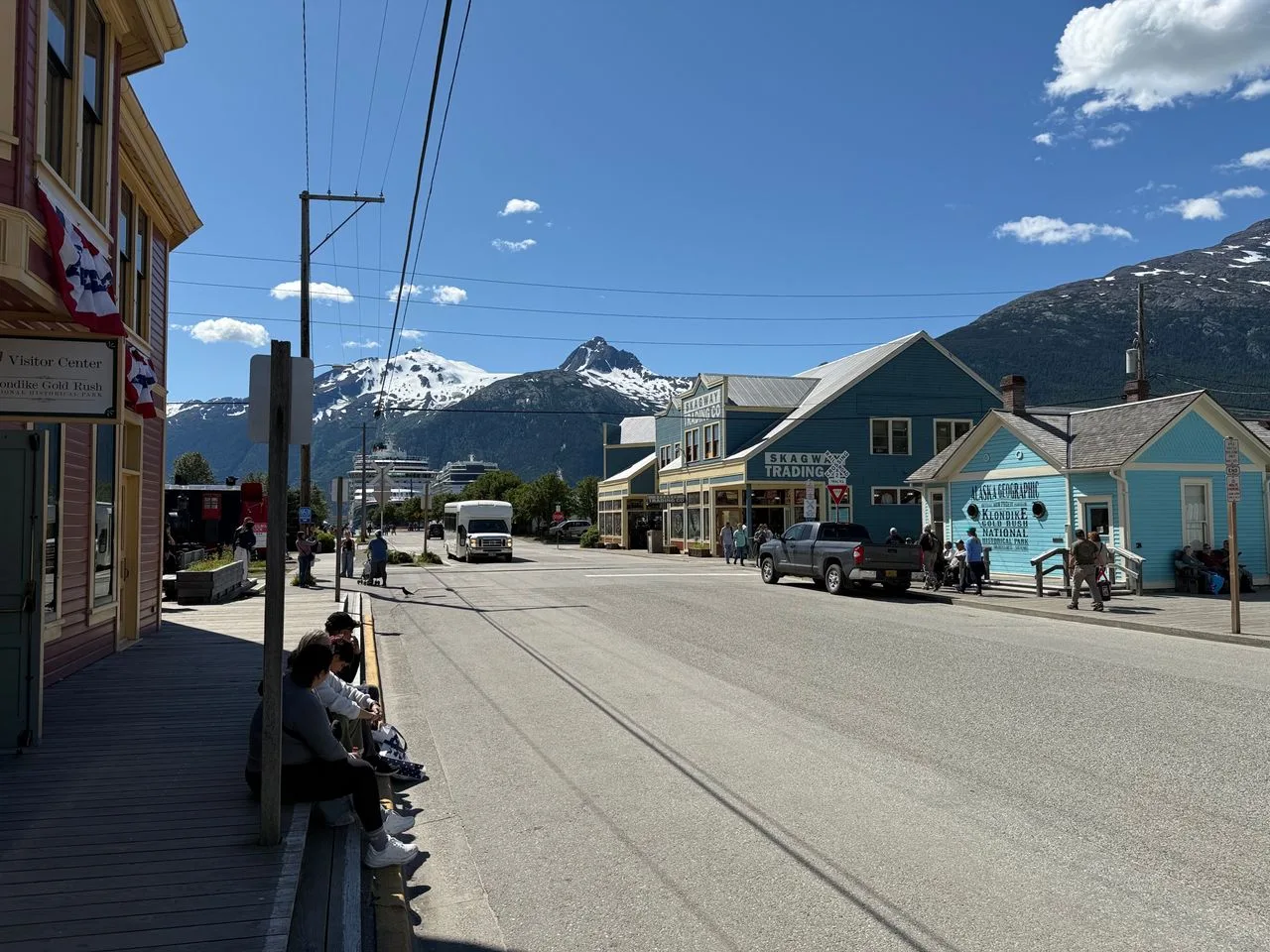
Skagway existed for about four years for one reason: it was the closest saltwater landing to the Chilkoot and White passes, and in 1898 roughly a hundred thousand people tried to get over them to the Klondike goldfields. Most of the town you walk through is from that window, and most of it is now a National Historical Park.
The railway is the thing. The White Pass & Yukon Route climbs nearly three thousand feet in twenty miles on two-foot-six-inch track cut into a cliff, past the trestle and the tunnel and the pack trail the stampeders actually walked. It is the single most-booked excursion in Alaska and it deserves to be. Sit on the left going up.
The alternative is the road. The South Klondike Highway climbs the same pass by bus and keeps going into British Columbia and the Yukon. It is a longer day, it crosses an international border, bring your passport, and it gets you into genuinely different country: dry, high and enormous, nothing like the rainforest at sea level.
The town is small and it is busy. Skagway’s permanent population is around a thousand, and on a summer day four ships can put ten thousand people onto seven blocks. Walk to the far end of Broadway or out toward Dyea and the crowd thins out within minutes.