Who Celebrity is for
Celebrity sits one rung above the mainstream lines and one rung below the luxury ones, and the gap it occupies is a real one. The ships are large, three to three-and-a-half thousand guests on the newest, so they carry a proper theater, a serious spa and eight or ten places to eat. What they do not carry is a water park, a go-kart track or a surf simulator, and that single omission does more to define the passenger list than any amount of marketing.
The result is a ship with adults in the clear majority outside school breaks, a quieter pool deck, and a food and service standard measurably better than the mass-market lines charge for. Couples in their forties and upward are the core. The line does carry children and runs a kids’ club, but it is not what the ships are built around and a family looking for onboard spectacle will get more for its money from Royal Caribbean, which is the same parent company deliberately aiming somewhere else.
It is not luxury. Fares are not all-inclusive by default, the ships are big enough to wait in line in, and anyone expecting a Seabourn or Regent standard of inclusion will find the bill at the end of the week says otherwise.
What is actually different about it
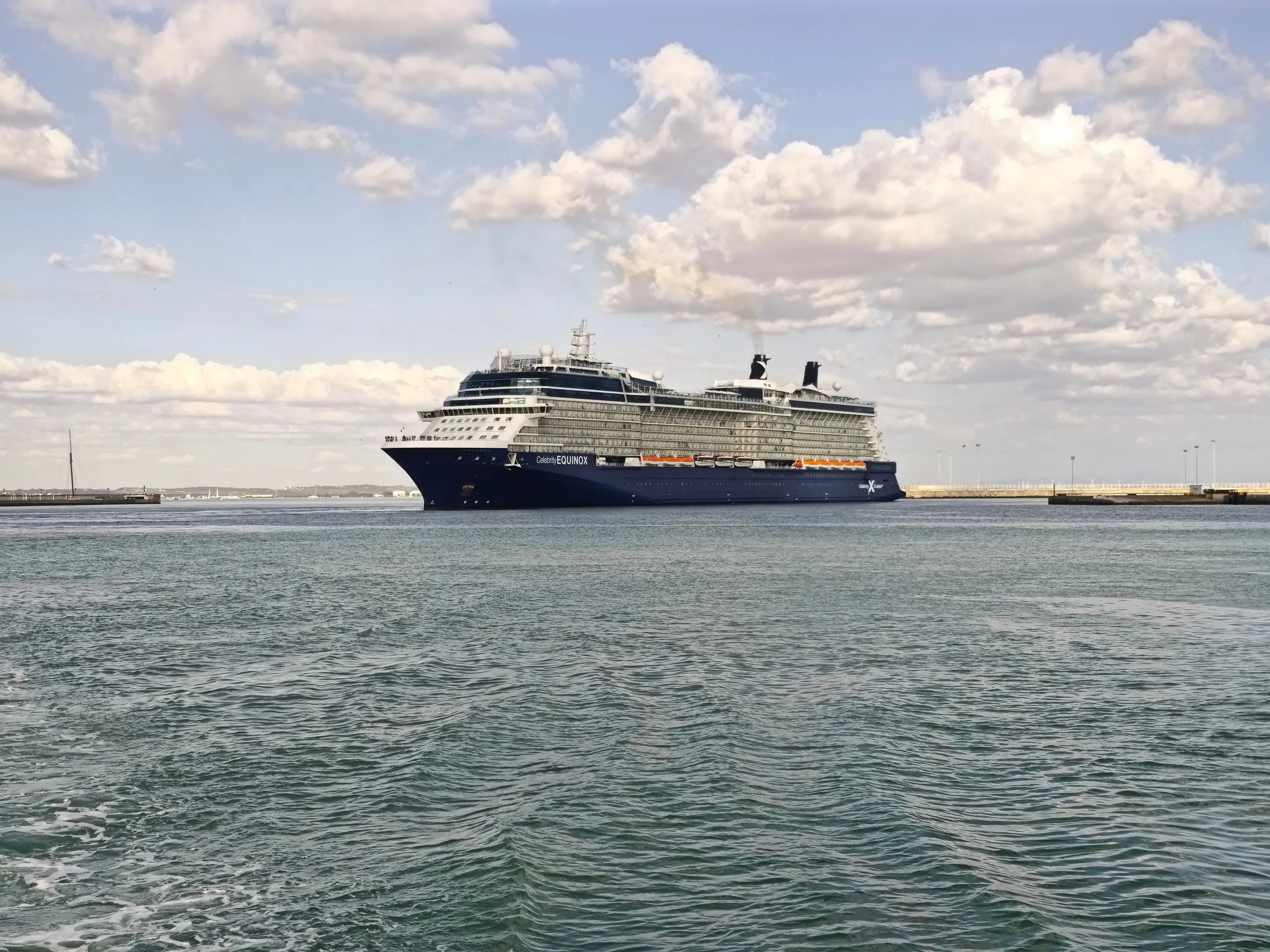
The Edge class and the Infinite Veranda. The ships launched from 2018 (Celebrity Edge, Apex, Beyond, Ascent and Xcel) replaced the conventional balcony in most cabins with a room whose seaward wall folds away: bifold doors open the front of the cabin to the air and a waist-height window drops. It buys noticeably more usable indoor space than a traditional balcony cabin of the same footprint, and it is the most divisive design decision in modern cruise shipbuilding. Some passengers prefer it. Others find that it is not an outdoor room at all, and that opening it can interfere with the cabin’s air conditioning in hot weather. If you know you want a rail to lean on, book an older ship or a Sunset Veranda.
Three generations of ship, still sailing together. The Millennium-class quartet dates from 2000 to 2002 and was the first cruise ships driven by gas turbines. The Solstice class, 2008 to 2012, is the middle of the fleet and for many passengers the sweet spot. The Edge class is the new one. They are recognizably the same brand but a Millennium ship in Asia and Ascent in the Caribbean are twenty years and a great deal of design apart. On this line, more than most, choose the ship as carefully as the itinerary.
The Galápagos operation is a separate business. Celebrity Flora carries a hundred guests, was designed for that archipelago and no other, holds station on thrusters instead of dropping an anchor, and sails an itinerary licensed by the Galápagos National Park. Nearly everything is in the fare: naturalists, Zodiac landings, snorkeling kit, drinks, gratuities, park fees. It shares a funnel logo with the main fleet and nothing else.
Where the fleet actually goes. The Caribbean and Europe dominate the calendar, with a substantial Alaska season, a large Asia and Australia program and regular transatlantic repositioning. It is a genuinely global deployment rather than a Caribbean line with a summer in the Mediterranean.
What to know before you book
Understand the fare before you compare prices. Celebrity sells a cruise-only fare and an All Included one that adds a classic drinks package and basic wi-fi. Daily gratuities are a separate line and are not covered by All Included as standard. A headline price from Celebrity and one from a mass-market line are not measuring the same thing in either direction.
Infinite Verandas are the thing people complain about. Read a description carefully, look at the deck plan, and if you are sailing somewhere hot and want the doors open, treat it as a decision rather than a detail.
The Galápagos fare is not a cruise fare. It is priced against expedition travel, usually needs flights through Quito or Guayaquil, and is most often bought as a ten-night or longer package with a mainland stay attached. Do not read it as a week in the Caribbean with different animals.