Ketchikan
Alaska's first town northbound, built on pilings over the water, with the largest collection of standing totem poles anywhere.
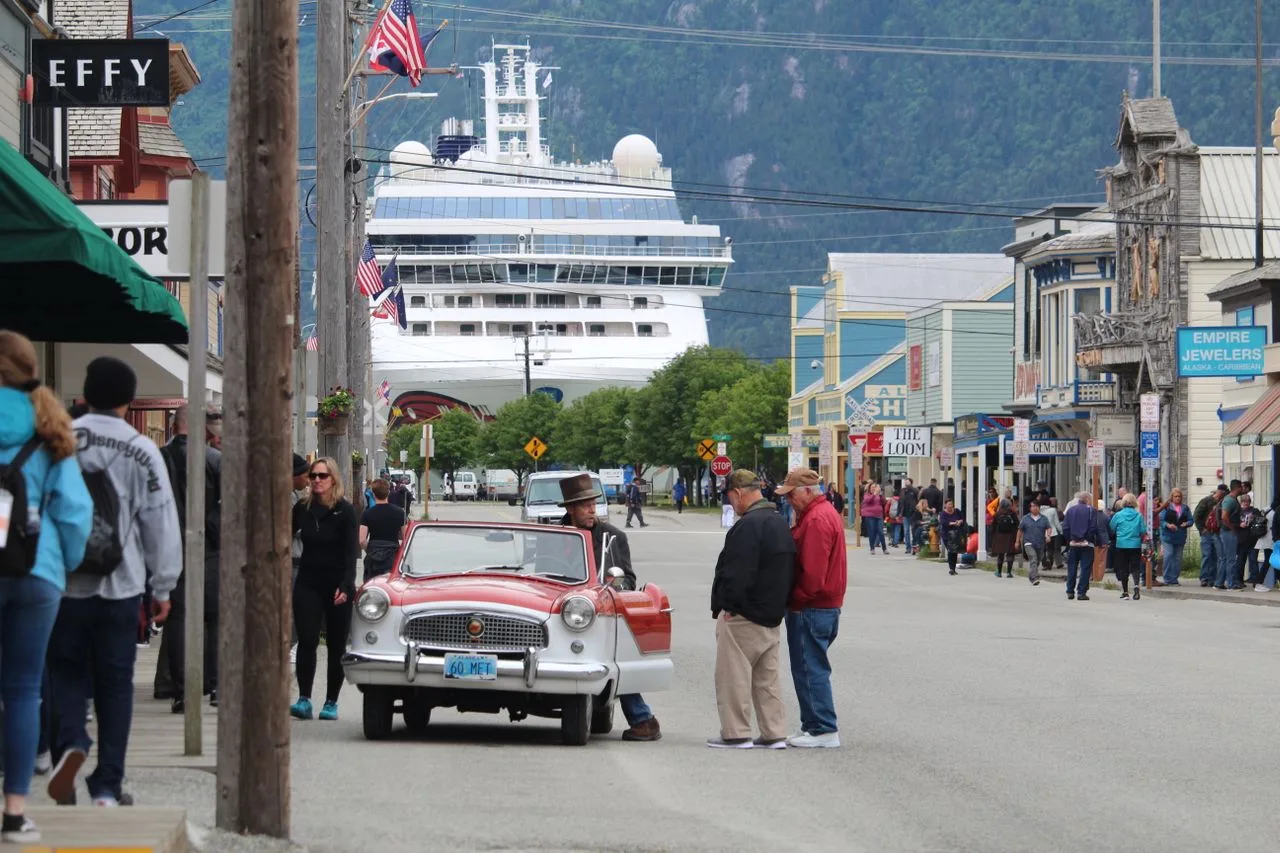
Photo: Howard Herdi · Re-encoded to WebP.
Ketchikan sits on the edge of the Inside Passage with a mountain immediately behind it, which is why the town is long and thin and partly built out over the water. It is the first Alaskan port most northbound ships reach and it is usually the shortest call of the week, often alongside by seven and gone by two.
It rains. Twelve to thirteen feet a year, which is among the wettest inhabited places in North America. Bring a real shell rather than an umbrella and go anyway, because the same weather is what makes the fjords look the way they do.
The totems are the reason to come. Ketchikan holds the largest collection of standing totem poles in the world, split between Totem Bight, Saxman Village and the Totem Heritage Center downtown. The Heritage Center is the interesting one: it holds unrestored nineteenth-century poles brought in from abandoned villages and left to age rather than repainted.
Watch the clock on flightseeing. Misty Fjords is genuinely spectacular and genuinely weather-dependent. Book the earliest slot: if it is canceled for cloud you still have the town, and if you book the late slot and the call is short you have neither.
Worth the Day
- Creek Street, the old boardwalk red-light district on stilts over Ketchikan Creek
- Totem Bight and Saxman, two parks of restored and recarved Tlingit poles
- Misty Fjords by floatplane, the one flightseeing trip that is worth the money here
- Salmon running up the creek ladder in July and August, visible from the boardwalk