Royal Caribbean International
Radiance of the Seas
Built with three acres of glass for cold-weather cruising, now parked year-round in the Gulf
Sailings Available
100
Ports Visited
8
Next Departure
Nov 7, 2026
Trip Length
4–8 nights
Now Booking
Sailings Aboard Radiance of the Seas
Royal Caribbean International
Western Caribbean Cruise
7 Nights
Nov 7, 2026 • departs Tampa
Royal Caribbean International
Western Caribbean Cruise
7 Nights
Nov 14, 2026 • departs Tampa
Royal Caribbean International
Western Caribbean Cruise
7 Nights
Nov 21, 2026 • departs Tampa
Royal Caribbean International
Western Caribbean Cruise
7 Nights
Dec 5, 2026 • departs Tampa
Royal Caribbean International
Perfect Day CocoCay & Caribbean Holiday
7 Nights
Dec 19, 2026 • departs Tampa
Royal Caribbean International
Western Caribbean Cruise
8 Nights
Jan 9, 2027 • departs Tampa
Royal Caribbean International
Western Caribbean Cruise
6 Nights
Jan 17, 2027 • departs Tampa
Royal Caribbean International
Western Caribbean Cruise
6 Nights
Mar 20, 2027 • departs Tampa
Royal Caribbean International
Western Caribbean Cruise
8 Nights
Mar 26, 2027 • departs Tampa
Royal Caribbean International
Western Caribbean Getaway Cruise
5 Nights
May 3, 2027 • departs Tampa
Royal Caribbean International
Western Caribbean Getaway Cruise
4 Nights
May 13, 2027 • departs Tampa
Royal Caribbean International
Western Caribbean Getaway Cruise
4 Nights
Nov 18, 2027 • departs Tampa
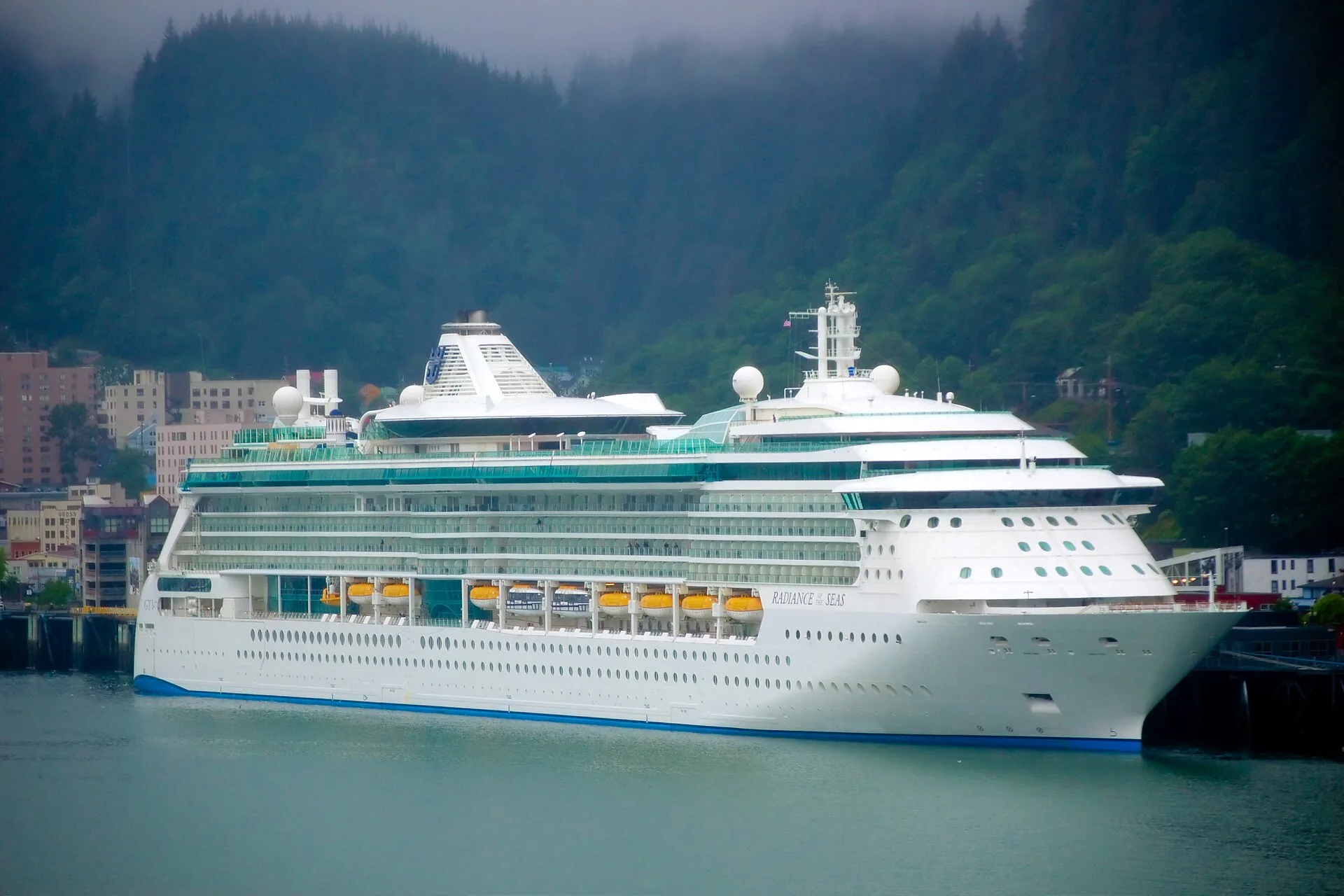
Radiance of the Seas is the lead ship of the four Radiance-class vessels Meyer Werft built for Royal Caribbean at Papenburg between 2001 and 2004. She is the smallest ship Royal Caribbean still operates in the Caribbean by a wide margin (around 90,000 tons against the quarter-million of the Icon class), and she was designed for the opposite of what she is doing now.
The glass ship
The design brief was cold-weather cruising: Alaska, the Baltic, New Zealand, places where the weather keeps you inside and the view is the reason you came. The answer was glass, roughly three acres of it. The elevators on her starboard side run up the outside of the hull in glass tubes facing the water. The main dining room is two decks with windows the height of both. The solarium pool sits under a roof that slides back when the weather allows and stays shut when it does not, which is the single most useful feature on a ship that spent twenty years in high latitudes.
She was also unusual under the waterline. The Radiance class runs gas turbines rather than the diesel-electric plant used on almost everything else in the fleet, cleaner, and thirstier, which is why nobody built many more of them. Her beam is Panamax, narrow enough for the original canal locks, and that is what made her a repositioning ship for two decades: Alaska in summer, Australia and New Zealand in the southern summer, the Panama Canal in between.
When she was new she carried the first self-leveling billiard tables at sea, gyroscopically stabilized against the roll. It is a small thing and it is still the detail people remember about her.
Twenty-five years, and a new job
She passed her twenty-fifth year in service in 2026 and immediately changed career. After a drydock at Freeport in late January and February 2026, she took up a year-round deployment from Tampa in the spring, the first time in her life she has stayed in one place.
That is the fact worth knowing before booking her. Every sailing in the schedule here is Caribbean and every one leaves Tampa: four- and five-night runs to Cozumel and Costa Maya as the core, six- to eight-night Western Caribbean itineraries appearing from early 2027, reaching Grand Cayman, Belize City and Roatán. Royal Caribbean has her committed to this through at least spring 2028. The glass roof over the solarium, built for Norwegian fjords, now shades a pool in the Gulf of Mexico.
Tampa is a slower sail than the Florida east coast ports, several hours down the channel and out past the bridge before open water, and it is why the ships based there are small.
Who she suits
People who have decided the modern megaship is not for them. There is no waterslide, no surf simulator, no zip line and no neighborhood structure. There is a two-deck dining room, a proper theater, a good spa, and a lot of window. At around 2,100 guests she is a quarter the size of the newest ships in the same sea, and the difference in queues and noise is the whole argument for her.
She also suits people who want a short Caribbean sailing without a long flight, if Tampa is a drive.
She does not suit families with teenagers, who will find her thin; the children’s program is fine for young kids and there is not much aboard for fifteen-year-olds. She does not suit anyone who wants a new ship: she is twenty-five years old, her cabins are small by current standards, and only about two-thirds of them have balconies. And she no longer suits anyone hoping to sail her in Alaska, which is what she was built for and where she is not going.
Photo: Fletcher6 · CC BY-SA 3.0 (share-alike) · Re-encoded to WebP.