MSC Cruises
MSC World America
The World class rebuilt for Miami, and MSC's serious bid for the American market
Sailings Available
207
Ports Visited
8
Next Departure
Nov 7, 2026
Trip Length
6–15 nights
Now Booking
Sailings Aboard MSC World America
MSC Cruises
7-Night Caribbean & Bahamas from Miami
7 Nights
Nov 7, 2026 • departs Miami
MSC Cruises
14-Night Caribbean & Bahamas from Miami
14 Nights
Nov 7, 2026 • departs Miami
MSC Cruises
14-Night Caribbean & Bahamas from Miami
14 Nights
Nov 14, 2026 • departs Miami
MSC Cruises
7-Night Caribbean & Bahamas from Miami
7 Nights
Nov 14, 2026 • departs Miami
MSC Cruises
7-Night Caribbean & Bahamas from Miami
7 Nights
Apr 3, 2027 • departs Miami
MSC Cruises
14-Night Caribbean & Bahamas from Miami
14 Nights
Apr 3, 2027 • departs Miami
MSC Cruises
14-Night Caribbean & Bahamas from Miami
14 Nights
Apr 10, 2027 • departs Miami
MSC Cruises
7-Night Caribbean & Bahamas from Miami
7 Nights
Apr 10, 2027 • departs Miami
MSC Cruises
14-Night Caribbean & Bahamas from Miami
14 Nights
Oct 30, 2027 • departs Miami
MSC Cruises
7-Night Caribbean & Bahamas from Miami
7 Nights
Nov 6, 2027 • departs Miami
MSC Cruises
14-Night Caribbean & Bahamas from Miami
14 Nights
Nov 6, 2027 • departs Miami
MSC Cruises
14-Night Caribbean & Bahamas from Miami
14 Nights
Nov 13, 2027 • departs Miami
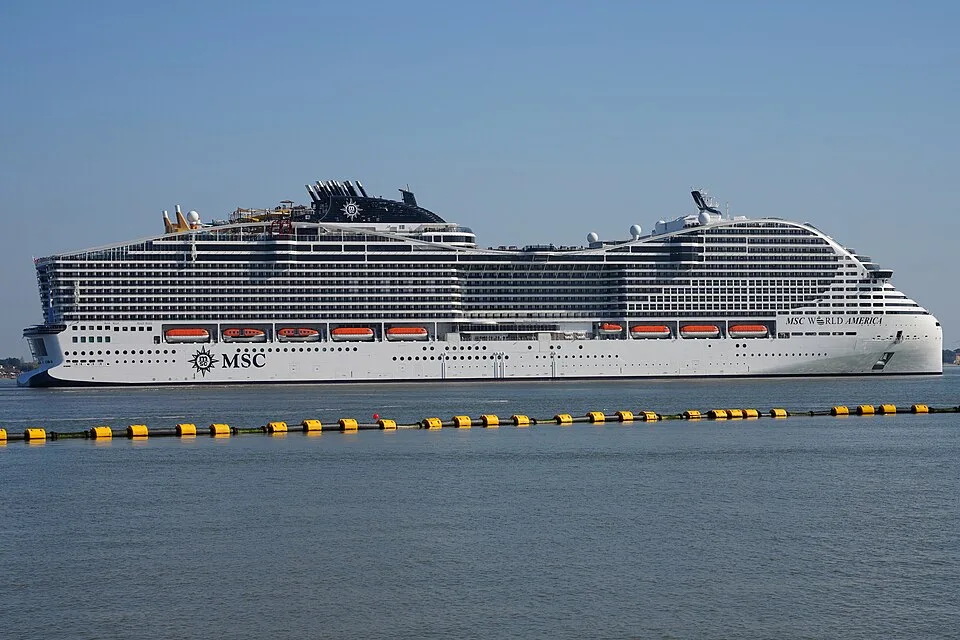
MSC World America is the second of the World class and the first one built with an American passenger in mind. Chantiers de l’Atlantique delivered her on March 27, 2025, the same 333-meter, LNG-burning hull as MSC World Europa, at 216,638 gross tons, and she went straight to Miami as a year-round ship. That is the whole point of her. MSC has sold in the United States for two decades without ever putting its newest and largest ship there first; this one changes that.
The layout is organized into seven named districts rather than one long promenade, which is a real structural difference and not just signage. Families get their own neighborhood with its own pools and water play, the entertainment and bar district is deliberately loud, and the Yacht Club is walled off forward at the top of the ship. The result is a ship that separates its crowds by interest instead of by deck, and it handles a full sailing better than the passenger count suggests it should.
What she is known for
The Yacht Club. The same gated suite complex MSC runs across the fleet, own restaurant, own lounge, own pool and sun deck, butler service, drinks included inside the gates. On an American itinerary competing directly with Royal Caribbean and Norwegian, this is the thing MSC has that they do not, and it is the reason to choose this ship.
The aft promenade. The Y-shaped open stern carried over from World Europa, with balcony cabins looking down into it. In the Caribbean it is the best space on the ship after dark.
LNG. She burns liquefied natural gas, which is unusual for a Miami-based ship and will not change anything about your week except that the funnel gas is cleaner and the ship is quieter alongside. Bunkering takes longer than fuel oil does, which is one of the reasons her turnarounds are structured the way they are.
The dining. She carries MSC’s fleet-wide specialty rooms (a steakhouse, a sushi and teppanyaki room, a taco and tequila bar, a chef-led restaurant) plus main dining rooms and a buffet included in the fare. This is where the European DNA is most obvious, and it cuts both ways. Pasta is a separate course, the fish is better than an American ship of this price serves, the espresso is real, and the buffet is smaller and less relentlessly American than the competition’s. If what you want on vacation is a soft-serve machine and unlimited fried chicken at two in the afternoon, this is not that ship.
The tiers. MSC sells the same cabin at three prices. Bella is cheapest and the room is assigned to you; Fantastica lets you choose it and adds room-service breakfast and flexible dining; Aurea adds a thermal-spa pass, priority boarding and a drinks package. Americans comparing an MSC lead-in fare against a competitor’s are usually comparing Bella against something considerably more inclusive, and the gap closes fast once you match them up properly.
Where she actually sails
Miami, round trip, every week of the year, and nothing else. Every departure on her schedule from now through October 2028 begins and ends at PortMiami.
The core is a pair of seven-night weeks that alternate. The Eastern runs to San Juan and Puerto Plata; the Western runs to Cozumel, Costa Maya and Roatán. Both of them end at Ocean Cay MSC Marine Reserve, MSC’s private island in the Bahamas, which she visits 333 times in this window, more often than any port except Miami itself.
The other half of the calendar is those same two weeks sold back-to-back as a single fourteen-night booking, which is how seventy-six of her departures are listed. If you want a fortnight in the Caribbean without repeating a port, that is the sailing to look at; it is the same ship and the same crew for two weeks and the ports do not overlap. A handful of six-, eight-, thirteen- and fifteen-night oddments fill the gaps around dry dock and holiday weeks.
Who she suits
Families and anyone who wants the newest large ship in Miami. She is a 21st-century hull with the district layout, the water park and the kids’ facilities to match, and MSC prices her below what the equivalent Royal Caribbean week costs. The fourteen-night combination is unusually good value for a Caribbean fortnight.
The Ocean Cay day is worth planning around. MSC’s private island is a rehabilitated aragonite sand-mining site in the Bahamas, replanted and surrounded by a marine reserve, and it is quieter and considerably less commercial than the private islands the American lines run. Ships stay into the evening rather than pulling out at four, which makes it the best day on the itinerary rather than the throwaway one.
She is not the right ship if you want a small crowd or a quiet sea day; she carries the better part of six thousand people and the pool deck knows it. The Miami turnaround at that scale is not a gentle experience either; embarkation day is the part of an MSC cruise that draws the most complaints in the United States, and on the largest ship in the fleet it is not going to be the exception. Arrive at your assigned time rather than early.
She is also a poor fit for anyone who wants short cruises. There are no three- and four-night Bahamas runs on her, that is MSC Seaside’s job out of the same port, and the shortest thing she sells is a week. And Americans who have not sailed MSC before should understand what they are buying before they compare prices: the onboard style is European, the extras are sold separately from a deliberately low headline fare, and the people who come off this ship disappointed have almost always been disappointed by those two things rather than by the hardware, which is as good as anything afloat.
Photo: JPD115 · CC BY-SA 4.0 (share-alike) · Re-encoded to WebP.