MSC Cruises
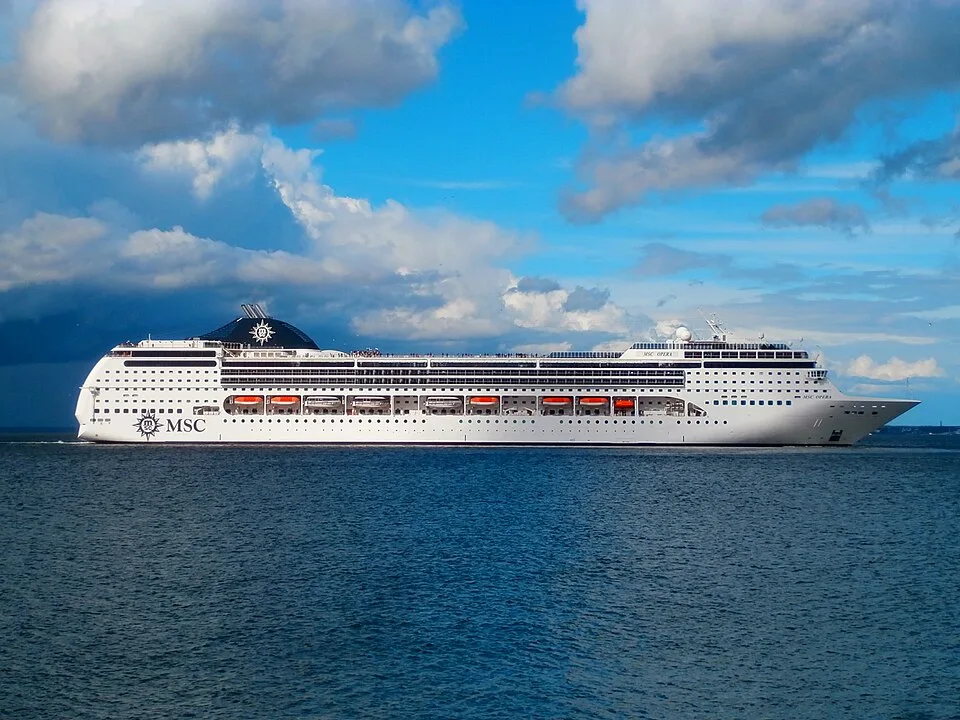
MSC Opera
The ship that hit a river boat in Venice, and the reason MSC's Venice ships now sail from Marghera
Sailings Available
296
Ports Visited
27
Next Departure
Sep 20, 2026
Trip Length
3–25 nights
Now Booking
Sailings Aboard MSC Opera
MSC Cruises
10-Night Western Mediterranean from Genoa
10 Nights
Sep 20, 2026 • departs Genoa
MSC Cruises
10-Night Mediterranean from Marseille
10 Nights
Sep 21, 2026 • departs Marseille
MSC Cruises
10-Night Mediterranean from Lisbon
10 Nights
Sep 25, 2026 • departs Lisbon
MSC Cruises
5-Night Mediterranean from Genoa to Lisbon
5 Nights
Sep 30, 2026 • departs Genoa
MSC Cruises
9-Night Mediterranean from Marseille to Genoa
9 Nights
Oct 1, 2026 • departs Marseille
MSC Cruises
5-Night Mediterranean from Lisbon to Genoa
5 Nights
Oct 5, 2026 • departs Lisbon
MSC Cruises
3-Night Western Mediterranean from Alicante to Genoa
3 Nights
Oct 7, 2026 • departs Alicante
MSC Cruises
3-Night Mediterranean from Civitavecchia to Marseille
3 Nights
Oct 29, 2026 • departs Civitavecchia
MSC Cruises
25-Night MSC Grand Voyages from Civitavecchia to La Romana
25 Nights
Oct 29, 2026 • departs Civitavecchia
MSC Cruises
4-Night Mediterranean from Civitavecchia to Barcelona
4 Nights
Oct 29, 2026 • departs Civitavecchia
MSC Cruises
18-Night MSC Grand Voyages from Civitavecchia to La Romana
18 Nights
Oct 29, 2026 • departs Civitavecchia
MSC Cruises
17-Night MSC Grand Voyages from Genoa to La Romana
17 Nights
Oct 30, 2026 • departs Genoa
MSC Opera is the second of the four Lirica-class ships and the one most people have seen footage of. On the morning of June 2, 2019 she was being towed up the Giudecca Canal toward the San Basilio pier when she lost engine control, struck the quay and then the moored river cruise ship River Countess, injuring five people. The video (a 65,000-ton ship sliding sideways into a Venetian waterfront while tourists ran) went around the world in a day and became the single most effective argument the campaign against large ships in the Venice lagoon ever had. Italy banned big ships from the Giudecca Canal in 2021.
The consequence is visible in this database. Every MSC sailing from Venice on the current schedule embarks at “Venice - Marghera,” the industrial port on the mainland, rather than the Stazione Marittima. Opera is the ship that moved them there, and she no longer sails from Venice at all.
Cut in half at Palermo
Between May 2 and July 4, 2015 she went through the same operation as her three sisters: Fincantieri at Palermo severed the hull, drew the halves apart and inserted a 24-meter prefabricated section carrying 193 cabins. She came out at 274.9 meters, MSC rounded it to 275 in the press release, and 65,591 gross tons, against 59,058 as built.
What the extra length bought was not headroom or public space. It was cabins, and the whole economic point of the Renaissance Programme was that cabins are what generate revenue while the crew, the galley and the engines stay roughly the same. She sails with 728 crew, nine passenger decks and a 94-foot beam, which is narrower than almost anything else working the Caribbean.
She had already been an unlucky ship before Venice: a complete power loss off Gotland in May 2011 left her under tow. The 2015 rebuild and the 2019 incident have between them defined her reputation, which is unfair to a perfectly competent vessel that has been carrying passengers for twenty-two years.
Where she actually sails
She has left Europe, and she is not coming back on this schedule.
Her last European work is a ten-night Western Mediterranean and Iberia circuit, sold from Genoa, Marseille, Málaga, Lisbon and Alicante, calling at Olbia, Mahon, Cádiz and Tangier. A single short season of it, and then in November she crosses the Atlantic on Grand Voyages of fourteen to seventeen nights.
After that she is a Caribbean ship, year-round, and an unusual one. Her bases are La Romana in the Dominican Republic, Fort-de-France in Martinique and Bridgetown in Barbados: not Miami, not San Juan. She runs seven-night Southern Caribbean weeks from La Romana above all, Fort-de-France well behind it, and fourteen-night versions from all three ports. Catalina Island, MSC’s beach call off the Dominican coast, is on very nearly every sailing. Philipsburg, Virgin Gorda, St. John’s, Road Town and Pointe-à-Pitre are the recurring stops, with Basseterre, Oranjestad, Willemstad and Kralendijk on the long weeks.
This is the French and Italian Caribbean product rather than the American one. Fort-de-France and Pointe-à-Pitre are the way European guests reach these islands on a European ship, and La Romana is a cheap flight from most of Europe. For a stretch of the winter the schedule narrows to La Romana only.
The volume tells you MSC is committed to this. She sails week in and week out, every month of the year, which for a twenty-two-year-old ship in a market she does not natively serve is a substantial bet. It also means availability is rarely a problem: if the week you want is sold out on her, the following one almost certainly is not.
Who she suits
Anyone who wants the Eastern and Southern Caribbean at close to the lowest price it is possible to pay. Seven nights among the Leewards on a mid-sized ship, at among the cheapest fares anyone sells, is not a thing that exists elsewhere, and the islands she calls at, Virgin Gorda, St. John’s, Road Town, are genuinely good ones.
The narrow beam matters here too. She berths in small island ports rather than anchoring off them, which on a Caribbean week saves an hour of tendering each way more than once.
She does not suit Americans looking for a familiar Caribbean cruise. The passenger list is European and largely French, announcements run through several languages, the dining is fixed seating, drinks are extra, and getting to La Romana or Fort-de-France from the United States is harder than driving to Miami. She is also a twenty-two-year-old ship with a rebuilt middle: the cabins are small, the balconies are few, the public rooms are dated, and there is no gated suite complex to escape into. If the ship rather than the islands is what you are buying, this is the wrong one.
Photo: Pjotr Mahhonin · CC BY-SA 4.0 (share-alike) · Re-encoded to WebP.