Carnival
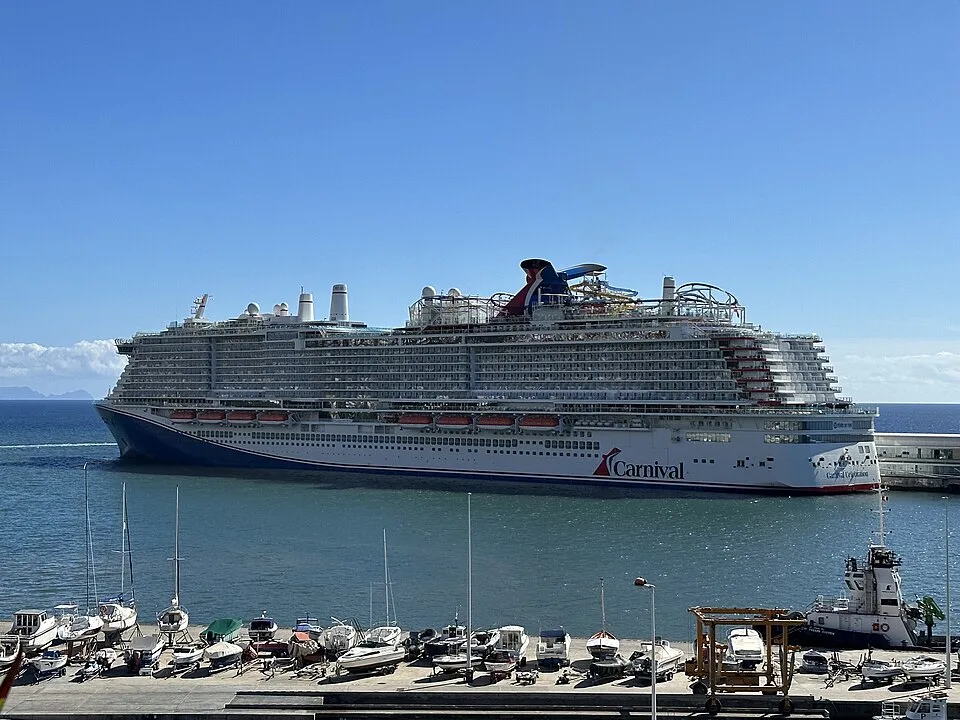
Carnival Celebration
Carnival's second LNG ship, with a roller coaster on the roof and six zones instead of one ship
Sailings Available
71
Ports Visited
12
Next Departure
Nov 8, 2026
Trip Length
7–8 nights
Now Booking
Sailings Aboard Carnival Celebration
Carnival
7-Night Caribbean
7 Nights
Nov 8, 2026 • departs Miami
Carnival
7-Night Caribbean
7 Nights
Nov 15, 2026 • departs Miami
Carnival
7-Night Caribbean
7 Nights
Nov 22, 2026 • departs Miami
Carnival
7-Night Caribbean
7 Nights
Nov 29, 2026 • departs Miami
Carnival
7-Night Caribbean
7 Nights
Dec 6, 2026 • departs Miami
Carnival
7-Night Caribbean
7 Nights
Feb 21, 2027 • departs Miami
Carnival
7-Night Caribbean
7 Nights
Mar 7, 2027 • departs Miami
Carnival
8-Night Caribbean
8 Nights
Mar 28, 2027 • departs Miami
Carnival
8-Night Caribbean
8 Nights
Apr 24, 2027 • departs Miami
Carnival
8-Night Caribbean
8 Nights
Apr 24, 2027 • departs Miami
Carnival
7-Night Caribbean
7 Nights
May 9, 2027 • departs Miami
Carnival
7-Night Caribbean
7 Nights
May 30, 2027 • departs Miami
Carnival Celebration was handed over by Meyer Turku on November 2, 2022 and sailed four days later, in the same month Carnival turned fifty. She is the second of the line’s Excel-class ships after Mardi Gras, and the class is worth understanding before the ship is: these were the first cruise ships in the world built to run on liquefied natural gas as their primary fuel, and the engineering compromise that made that possible shows up in an unexpected place.
What LNG actually changed
The gas is stored cold, in tanks, and the tanks are large. Accommodating them reshaped the lower hull and the machinery spaces, and the result is a ship with about 57 MW of installed power driving two azimuth thrusters, enough for a service speed of roughly seventeen knots, which is slow for a ship this size. Sources put her maximum around twenty-three.
That number is a deployment decision. A ship doing seven-night Caribbean loops from Miami never needs to sprint, and the fuel saved by not being able to is the whole argument. It does mean her itineraries are built around short hops between close islands, and it is why you will not see her on a long repositioning run.
The trade going the other way is emissions. LNG is what lets her burn cleaner in port than any older Carnival hull, which matters when the ship is in Miami overnight every week.
Six zones and a coaster
The Excel layout abandons the single-spine promenade for six named zones: Celebration Central, the atrium; the Gateway; Summer Landing at the stern; 820 Biscayne; the Lido; and the Ultimate Playground on top. On Celebration specifically, 820 Biscayne is the one that justifies the naming, an Art Deco quarter themed on Miami Beach, with Bar 820 at its center, which is a slightly absurd thing to build on a ship whose homeport is a forty-minute drive from the actual Art Deco district.
BOLT is the reason most people book her. It is an all-electric coaster on an 800-foot track around and over the funnel, 187 feet above the water, with two-seat motorcycle-style cars whose speed the front rider controls up to about forty miles an hour. It costs extra, it closes in weather, and it is a genuinely novel thing to do at sea.
The Golden Jubilee, a gold-leafed bar commemorating the line’s fiftieth year, sits in the Gateway. Eating is the deep bench: Emeril’s Bistro 1397, Rudi’s Seagrill, Bonsai Teppanyaki, Big Chicken, Street Eats, Cucina del Capitano and Fahrenheit 555, alongside the free stuff.
Where she actually sails
Miami, year-round, on seven- and eight-night Caribbean itineraries, the Eastern, Western and Southern rotations, with almost every departure calling at Celebration Key on Grand Bahama since it opened in July 2025. Her 2026 route book was the largest rework since she entered service, adding Jamaica and the Cayman Islands to the mix.
Who she suits
Families with teenagers, groups who want the ship to be the destination, and anyone who wants the newest kind of Carnival hardware without paying for the newest ship. At 5,362 guests double occupancy there is enough of everything.
She does not suit anyone who wants a quiet week. Six zones spread the crowd but they do not shrink it, the good tables and the BOLT slots go early, and a full Excel-class ship on a Saturday turnaround in Miami is one of the denser experiences in the industry. She is also the wrong ship if you want sea days and distance; she is slow on purpose and her week is built around getting off in the morning and back on by five.
Photo: Carnival Celebration · CC BY-SA 4.0 (share-alike) · Re-encoded to WebP.