AmaWaterways
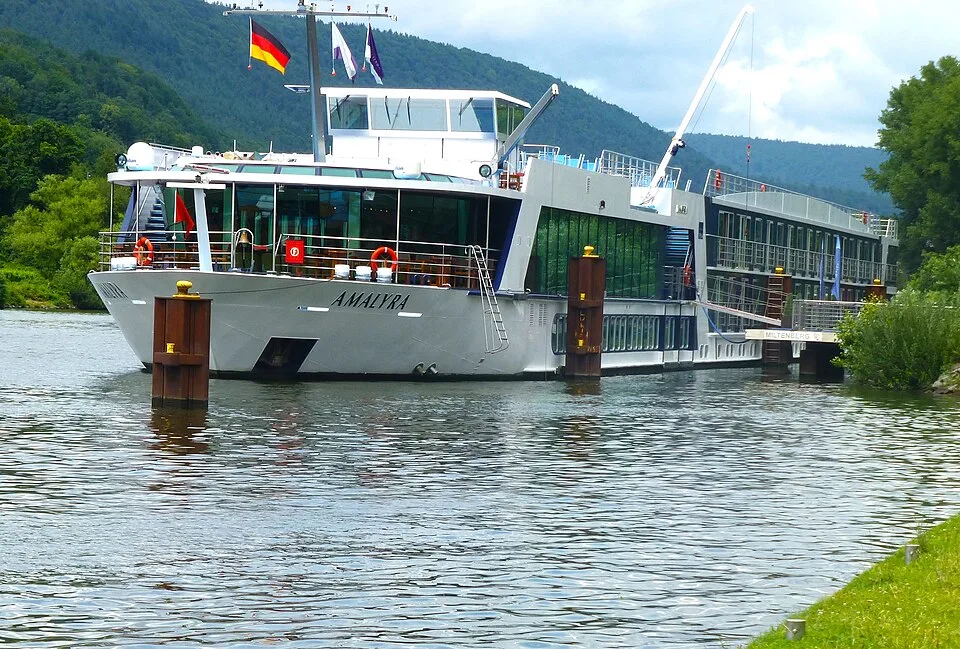
AmaLyra
The oldest and smallest of these, and she does one river out of Paris
Sailings Available
207
Ports Visited
23
Next Departure
Sep 24, 2026
Trip Length
7–14 nights
Now Booking
Sailings Aboard AmaLyra
AmaWaterways
Paris & Normandy (Smithsonian Journeys)
7 Nights
Sep 24, 2026 • departs Paris
AmaWaterways
Paris & Normandy
7 Nights
Sep 26, 2026 • departs Paris
AmaWaterways
Grand Seine & Bordeaux
14 Nights
Oct 1, 2026 • departs Paris
AmaWaterways
Grand Seine & Rhône
14 Nights
Oct 8, 2026 • departs Paris
AmaWaterways
Paris & Normandy
7 Nights
Oct 29, 2026 • departs Paris
AmaWaterways
Paris & Normandy (Wine Cruise)
7 Nights
Nov 5, 2026 • departs Paris
AmaWaterways
Grand Seine & Rhône (Winter & Wine)
14 Nights
Nov 5, 2026 • departs Paris
AmaWaterways
City Escapes: The Seine
7 Nights
Nov 12, 2026 • departs Paris
AmaWaterways
Paris & Normandy (Wine Cruise)
7 Nights
Mar 25, 2027 • departs Paris
AmaWaterways
Grand Seine & Rhône - Wine Cruise
14 Nights
Mar 25, 2027 • departs Arles
AmaWaterways
Grand Seine & Bordeaux (Wine Cruise)
14 Nights
Apr 1, 2027 • departs Paris
AmaWaterways
Grand Seine & Rhône - Smithsonian Journeys
14 Nights
Apr 22, 2027 • departs Paris
AmaLyra is the oldest and smallest of AmaWaterways’ European ships in this part of the fleet, and the only one here that spends its whole season on one river. She was launched at Vilshofen in April 2009, one of a short run of four near-identical boats with AmaCello, AmaDante and AmaDolce, and she now works the Seine out of Paris.
Eighty-three feet shorter, and why that is not the river’s fault
She is 360 feet long where the fleet’s standard European ship is 443. It would be tidy to say the Seine forced it. It did not; 135-meter vessels sail the Seine routinely, and several competitors put them there. Her length is simply what AmaWaterways was building in 2008 and 2009, before the line settled on the longer hull.
The consequence is a boat that carries 140 guests in seventy-one staterooms with forty-five crew. That is fewer people than any other European ship on this site’s AmaWaterways list, and it is the honest reason to choose her: the lounge is not crowded, the single restaurant seating is not a scrum, and after two days you know most of the faces.
It is also the honest reason not to. The 2016-built ships have three dining rooms; she has two, the Main Restaurant and The Chef’s Table, plus light food in the lounge. They have a heated Sun Deck pool; she has a whirlpool. Her staterooms top out at 255 square feet for a suite and 170 for the common categories, where a newer ship’s suite is 350. And AmaWaterways describes her accommodation as many staterooms and all suites having a French balcony, which means some of them do not; the lowest rooms on the bottom deck have fixed windows at waterline. There are no twin balconies aboard. If the double-balcony arrangement is what drew you to this line, she is not the ship that has it.
Paris, and then Paris again
Her deployment is the simplest in the fleet: round-trip from Paris, seven nights, downriver through Vernon for Giverny, Les Andelys, Rouen and Le Havre for the Normandy beaches, then back. There is a fourteen-night option that pairs the Seine week with Bordeaux. The Seine and the Gironde are not connected waterways, so that is a combination trip with a change of ship in between rather than one continuous voyage, worth understanding before you book it.
Round-trip matters more than it sounds. On a Danube or Rhine cruise you fly into one city and out of another, and the transfers are a real cost and a real nuisance. Here you land at Charles de Gaulle, board in Paris, and leave from Paris. It is the easiest European river itinerary to bolt extra days onto at either end, and a great many people do.
The Normandy day is the one that defines the week. It is long, a full coach day from Le Havre to the landing beaches and the American cemetery at Colleville, and it is the reason most passengers are aboard. Anyone booking this cruise for the Impressionists rather than for 1944 should look hard at the itinerary first.
Who she suits
First-time river cruisers who want one country, one language, one airport and no ship changes. Anyone with a specific interest in Normandy. Travelers who would rather be on a boat with 140 people than one with 196, and who do not care that the boat is seventeen years old.
She does not suit anyone who wants the current AmaWaterways product. The twin balconies, the pool, the third restaurant and the larger suites are all on the newer hulls, and she has none of them. She does not suit passengers who need a lot to do aboard, because the Seine week is short on sailing time and the ship is correspondingly short on facilities. And she does not suit anyone hoping to see several countries: she has done one river for years, and there is no sign of that changing.
Photo: Bingar1234 · CC BY-SA 4.0 (share-alike) · Re-encoded to WebP.