AmaWaterways
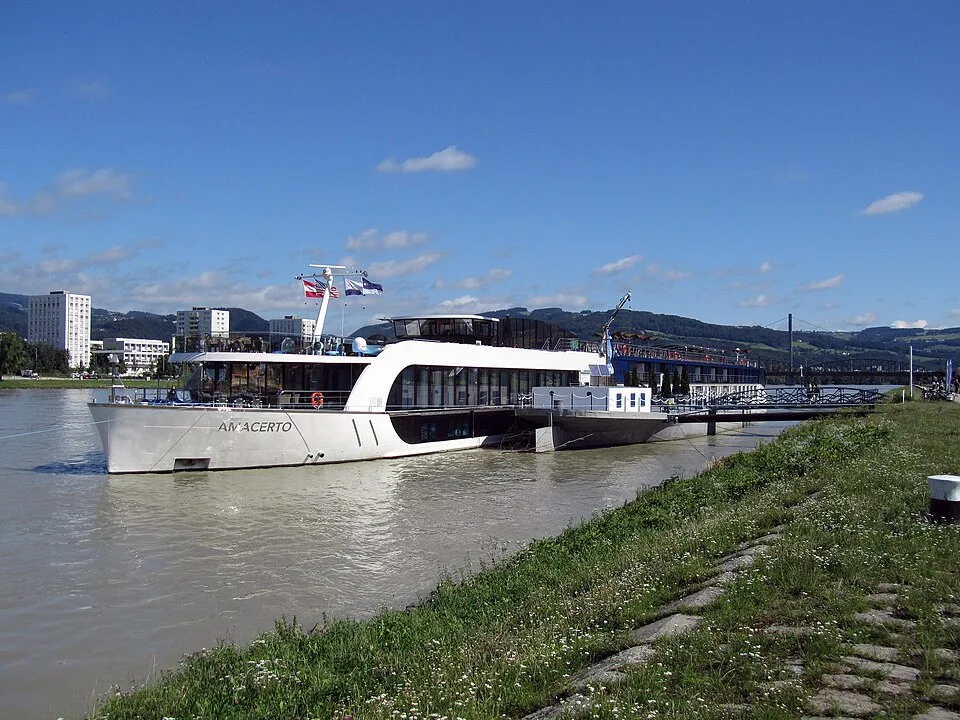
AmaCerto
Three rivers in one schedule, and a calendar that does not stop for winter
Sailings Available
70
Ports Visited
22
Next Departure
Sep 30, 2026
Trip Length
7–10 nights
Now Booking
Sailings Aboard AmaCerto
AmaWaterways
Vineyards of the Rhine & Moselle
7 Nights
Sep 30, 2026 • departs Amsterdam
AmaWaterways
Europe's Rivers & Castles
7 Nights
Oct 21, 2026 • departs Luxembourg
AmaWaterways
Europe's Rivers & Castles (Wine Cruise)
7 Nights
Oct 28, 2026 • departs Nuremberg
AmaWaterways
Rhine & Moselle Splendors (Wine Cruise)
7 Nights
Nov 4, 2026 • departs Wasserbillig
AmaWaterways
City Escapes: The Rhine
7 Nights
Nov 11, 2026 • departs Basel
AmaWaterways
Christmas Markets on the Rhine (Wine Cruise)
7 Nights
Nov 25, 2026 • departs Basel
AmaWaterways
Enchanting Rhine - Christmas Time & New Year's Celebration Cruise
7 Nights
Dec 23, 2026 • departs Basel
AmaWaterways
Medieval Treasures (Wine Cruise)
7 Nights
Mar 24, 2027 • departs Basel
AmaWaterways
Europe's Rivers & Castles
7 Nights
May 5, 2027 • departs Nuremberg
AmaWaterways
Rhine & Moselle Delights
10 Nights
Oct 27, 2027 • departs Basel
AmaWaterways
Medieval Treasures
7 Nights
Nov 17, 2027 • departs Basel
AmaWaterways
Magical Christmas Markets of Germany
7 Nights
Nov 24, 2027 • departs Nuremberg
AmaCerto was launched in May 2012 and christened at Vilshofen by Christine Duffy, who was then running the Cruise Lines International Association, a choice of godmother that says something about where AmaWaterways thought it stood in the industry that year. She is 443 feet long and about 38 feet wide, which is not a design decision so much as an admission: that is the largest box the locks of the Rhine, the Main and the Main-Danube Canal will accept, and every full-size ship on those rivers is built to it.
What separates her from the eight or so sisters built to the same box is not the hull. It is the schedule, which sends her onto three different rivers and keeps her working in the months when most of the fleet is tied up.
What is aboard
Eighty-one staterooms, 162 guests at double occupancy, fifty-one crew, a shade over three guests per crew member. The categories run from 155 square feet up to a 350-square-foot suite, and most of the ship has the twin balcony, which is AmaWaterways’ one genuine structural advantage over its competitors: a French balcony you open onto the room and a separate step-out veranda with chairs, in the same stateroom, on a hull no wider than anyone else’s.
Four decks, named Sun, Violin, Cello and Piano. Two restaurants, the Main Restaurant and The Chef’s Table, the second a small room with a view into the galley and a set tasting menu, booked once per cruise and included in the fare. The Sun Deck carries a heated pool with a swim-up bar and a walking track, and the ship carries bicycles for riding ashore. There is a fitness room, a hair salon and massage service. The elevator serves the Violin and Cello decks and does not reach the Sun Deck, which is the standard compromise on this class and worth knowing about before booking a low cabin.
Where she actually sails
Three rivers, and she uses all of them.
The Rhine is the backbone: twenty-six of her departures run between Basel and Amsterdam, mostly seven nights, a few stretched to ten. Those weeks are the classic route, Breisach for the Black Forest, Strasbourg, Ludwigshafen where the Heidelberg coaches wait, Rüdesheim and Mainz for the gorge, Cologne and Düsseldorf on the way down to the Dutch delta. Amsterdam is her single most-visited port, at fifty-eight calls.
The Main is the second. Nine departures run Frankfurt to Nuremberg and nine run the reverse, seven nights each, through Würzburg, Wertheim, Miltenberg, Kitzingen, Eltmann and Bamberg before the Main-Danube Canal lifts her over the watershed to Nuremberg. Frankfurt and Nuremberg tie at forty-five calls apiece, and Würzburg and Wertheim are close behind at forty-two and thirty-eight.
The Moselle is the third and the least ordinary. Sixteen departures run Nuremberg to Luxembourg, with three more from Amsterdam and two back from Luxembourg, and the ports that come with them (Cochem twenty-three times, Wasserbillig eighteen, Bernkastel six) do not appear on most river-cruise schedules at all. Wasserbillig is a Luxembourg village at the mouth of the Sûre that exists on this itinerary as a place to hand a ship over; almost nothing else in the database boards passengers there.
The itinerary names underneath all of this are City Escapes: The Rhine with twenty departures, Europe’s Rivers & Castles with seventeen, and Magical Christmas Markets of Germany with twelve, plus smaller runs of Medieval Treasures, Vineyards of the Rhine & Moselle and a ten-night Rhine & Moselle Delights. Roughly a third of her calendar is a Christmas-market or New-Year sailing.
And she does not lay up. There are departures in January, February and March of both 2027 and 2028, which is unusual; the European river season conventionally runs from March to December, with a long winter gap while the fleet sits. AmaCerto fills that gap with short city-focused weeks on the Rhine. If you want a river cruise in February, she is one of very few ships in this database that will sell you one.
Who she suits
Someone who wants the standard German river-cruise itinerary done on a full-size, well-equipped, mid-career hull and does not need the newest thing in the fleet. The Basel-to-Amsterdam week is the route this whole industry was built on, and she runs it more than any other single itinerary. She also suits travelers who want the Moselle, which is genuinely a different river (narrower, steeper, quieter, with vineyards straight up the slate on both sides), and which you cannot get by booking whichever Danube boat is cheapest.
She is the wrong ship for anyone who wants a warm-weather cruise, because her densest months are November and December and her cheapest are January and February. She is wrong for anyone who wants variety in dining: two restaurants, one of them a once-a-cruise tasting menu, is the whole of it. She is wrong for anyone whose mobility depends on an elevator reaching everywhere, since the Sun Deck (the pool, the walking track, the view of the gorge) is up a flight of stairs. And if the Danube, Vienna and the Wachau are what you pictured, that is not her river; she has no Danube departures on this schedule at all, despite what a general description of the class might lead you to expect.
Photo: Millers · CC BY-SA 2.0 (share-alike) · Re-encoded to WebP.